
Wiley continues to expand its IR, Raman, and SmartSpectra spectral libraries to help laboratories meet evolving analytical challenges
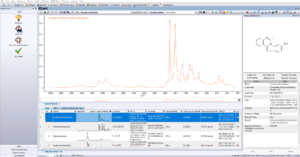
Wiley announces the expansion of its spectral libraries across IR and Raman, adding empirical and computed reference data spanning forensics, pigments and dyes, mineralogy, materials, polymers, and pharmaceuticals. This release adds over a thousand new empirical reference spectra, plus more than 429,000 new SmartSpectra records, across dozens of updated and new databases. This brings the combined collections to over 1.4 million IR spectra and 230,000 Raman spectra.
“Scientific discoveries and business decisions depend on trustworthy analytical results,” said Graeme Whitley, senior director, data science solutions at Wiley. “The value of a spectral library expansion is not simply that it adds more records. It gives analysts more relevant reference candidates when they encounter unfamiliar materials, whether they are verifying a polymer, investigating a pharmaceutical sample, examining a mineral, or screening a forensic specimen.”
Highlights include:
- Forensics: A new Raman forensics database adds reference spectra for colorant and dye identification on textiles, drawn from real fiber-evidence research, useful for investigators working on dye and textile analysis.
- Pigments and dyes: New Raman and IR data significantly broadens pigment and dye coverage, including historic artists’ pigments, supporting art conservation and cultural-heritage authentication work.
- Minerals: New Raman and IR data extends coverage to minerals from different localities and Martian mineral analogs. This release includes new Raman additions from our ongoing collaboration with the American Museum of Natural History, now cross-referenced with DANA Classification Numbers and Mindat IDs, giving mineralogists and gemologists an easier way to identify entries against established references.
- Materials and semiconductors: New Raman and IR data covers crystal growth relevant to battery materials, rare-earth-doped magnetic crystals, and flexible and 2D semiconductor materials, useful for researchers in battery, magnetic materials, and electronics work.
- Polymers: New Raman and IR data spans 3D-printed, MOF-integrated microlattices, environmental plastic aging and recycled PET materials, and food packaging plastics. New Raman reference spectra also cover more than two dozen synthetic polymer types for identifying microplastics in environmental samples.
- Clinical and pharma: New Raman and IR data covers antibiotic classes, including beta-lactams, and the WHO’s essential antibiotic list, plus bone mineralization studies in clinical models. A new IR dataset also adds spectra for common over-the-counter medications, including aspirin, ibuprofen, and paracetamol, helping quality control teams confirm formulations faster.
- SmartSpectra: Our SmartSpectra IR, Raman, and vapor-phase IR collections continue to grow, adding 243,000+ IR, 67,000+ Raman, and 119,000+ vapor-phase IR computed reference spectra to support broad, high-throughput identification.
Learn more at sciencesolutions.wiley.com/spectral-databases. Existing subscribers can find guidance on updating their databases at http://sciencesolutions.wiley.com/how-to-update-knowitall-databases.
Wiley Spectral Databases
Wiley’s spectral databases are consistently evolving to meet today’s research demands, covering multiple spectral techniques across a wide range of applications including polymers, materials, environmental, forensics, toxicology, pharmaceutical, biotech, automotive, aerospace, food, cosmetics, and more. Built on rigorous quality protocols, Wiley delivers industry-leading spectral data and intelligent tools to accelerate analysis and deliver deeper insights — making it the authoritative, trusted source that analytical labs worldwide rely on. Learn more at sciencesolutions.wiley.com.
