The Trials and Tribulations of the US Academic and Government End-Market in 2025: Presentation Highlights from the 44th JPMorgan Healthcare Conference
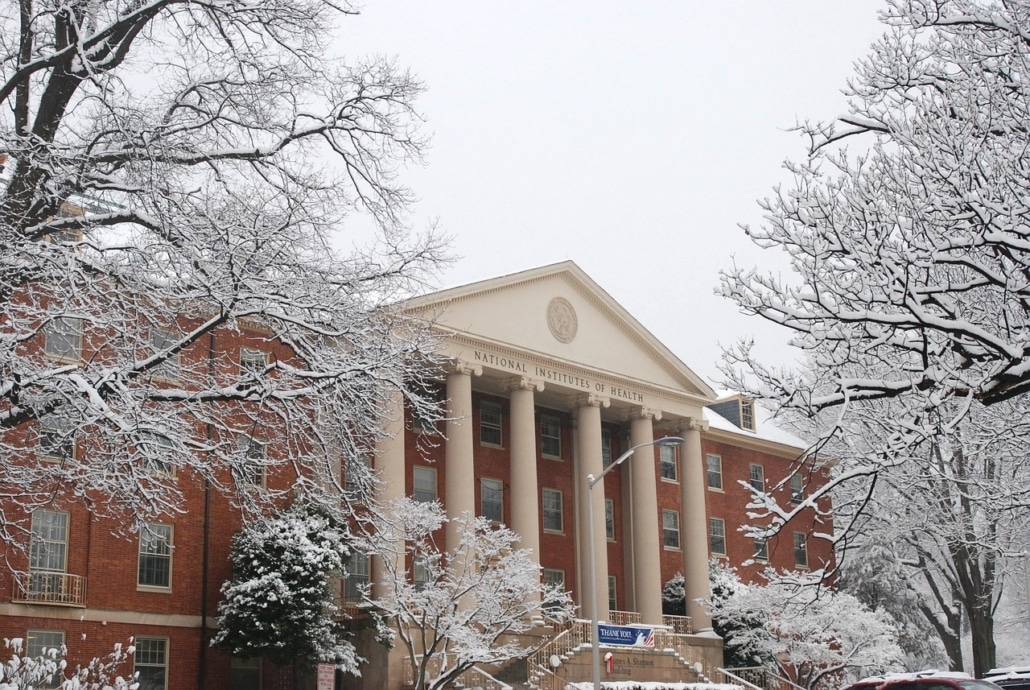
On February 7, 2025, the Trump administration announced a 15% cap on all indirect costs for new and existing NIH grants. However, on April 4, 2025, the US District Court in Massachusetts enacted a preliminary injunction blocking the limit. In response, the HHS appealed the injunction to the US Court of Appeals for the First Circuit, where the appeal is pending review. On January 6, 2026, the US Court of Appeals for the First Circuit concluded the 15% cap for grants violated statutory law and the NIH’s own regulatory procedures.
As a result of the change in academic and government funding, some IBO-covered lab tools companies in 2025 disclosed their exposure to NIH funding or US government academic funding and provided forecasts of how the policy change could affect their sales performance in the US academic and government end markets. For instance, when announcing their CY25 financials in 2025, 10x Genomics (10x), Oxford Nanopore and Pacific Biosciences (PacBio) declared their NIH exposure at an estimated 20%–25%, 10%–15% and 20%, respectively.
As 2025 progressed, the policy change proved to be a sales headwind for the lab tools industry. However, in the second half of 2025, some firms noted the impact lessening yet remaining an overall net negative.
As 2026 commenced, select IBO-covered companies gave presentations at the 44th JPMorgan Healthcare Conference, held between January 12 and 15, with their financial standings in the US academic and government end-market being a topic of note. These companies were 10x, Agilent Technologies (Agilent), Avantor, Bio-Techne, Bruker, Cytek Biosciences (Cytek), Danaher, Illumina, Merck KGaA Darmstadt, Germany, Oxford Nanopore, PacBio, QIAGEN, Revvity, Tecan and Thermo Fisher Scientific (Thermo Fisher).
US Academic and Government-Related Presentation Highlights
When referencing their sales performance in the US academic and government end-market in 2025 in their presentations, the majority of IBO-covered companies noted that they primarily struggled in the sector due to policy changes by the White House earlier in the year. As a result, these companies saw less capital equipment investment from US academic and government end-users in 2025. Specifically, 10x, Agilent, Avantor, Bruker, Illumina, Merck KGaA Darmstadt, Germany, PacBio, Tecan and Thermo Fisher all highlighted changes in NIH funding distributions as the primary reason. However, each company experienced different effects from this shift.
Situation Improves in Fourth Quarter 2025
Companies noted that the situation improved as 2025 progressed due to more certainty and stability about funding among government and academic labs in Q4 CY25 that both benefited and did not benefit select IBO-covered companies’ US academic and government market sales towards the end of 2025. For example, though 10x’s first nine-month sales grew 7.0% to $476.8 million, the company stated in its presentation that its high exposure to the US academic and government market was a sales deterrent throughout 2025. However, 10x also said sales in that market performed better in the second half of 2025 than in the first half.
Like 10x, Danaher also benefited from a more stable end-market as the year progressed. As a result, the company predicted it recorded slow but steady sales growth in the US academic and government end-market in 2025.
Conversely, Revvity’s Life Science segment did not gain much advantage in Q4 CY25. This could be due to the division having high exposure to the global academic and government market, which accounts for approximately 25% of Life Science segment sales. The company stated that the division’s instrument sales performed better in the pharmaceutical and biotech end-market than in the academic and government end-market.
In Avantor’s presentation, the company stated its global academic and government end-market sales for Q3 CY25 declined by double digits. The primary reason for the sales performance was due to non-NIH funding constraints had by its US K-12 education customer base. However, the US K-12 education customer base experienced a budget flush from those same funding sources in Q4 CY25.
Other Highlights
Switching gears, in its presentation, Bruker stated that its aftermarket, consumables and services sales in the US academic and government end-market offset declining instrument sales in 2025. The academic medical sector was a source of strength, which saw its NMR, MS, and microscope products sell well in that market. One reason for the growth was due to these institutions receiving significant NIH and National Science Foundation (NSF) funding.
For PacBio, low NIH funding negatively affected its overall American sales in 2025. The reason was US academic end-users’ hesitance to purchase its consumables and Revio sequencing systems.
On a positive note, Oxford Nanopore highlighted that in the second half of 2025, its global academic and government sales grew about 30%, and its orders in the Americas’ academic and government market increased by high single digits.
Although Cytek did not specifically emphasize the US academic and government sectors in its presentation, it stated that it saw a recovery in capital equipment investment in the academic sector at year end, driven by high utilization of its Aurora platforms by large academic labs. Like Cytek, Illumina noted its NovaSeq X-series franchise sold well in the academic research lab sector.
Thermo Fisher provided some insights into its academic and government market sales. Sales in this end-market comprised 15% of total sales in the first nine-month of the year, which grew 2.7% to $32.3 billion. Further details indicated that 8% of its nine-month 2025 academic and government end-market sales came from the US.
Guidance
Select IBO-covered companies also guided expectations for how their global or US academic and government end-market sales would perform in the short and medium term. Due to positive sentiment at the end of 2025, Danaher predicts academic and government budget levels will remain stable in 2026 and 2027. Furthermore, the stability could lead to its Aldevron and Integrated DNA Technologies (IDT) businesses landing in positive sales territory in the US academic and government end-market in 2026. Likewise, 10x believes budget levels in the first half of 2026 will resemble those in the second half of 2025.
Bio-Techne, Illumina, PacBio, Thermo Fisher and QIAGEN foresee funding levels or end-user sentiment improving in the US academic and government end-market in 2026. QIAGEN expects its full-year 2026 sales in this market to grow in the mid-single digits. Both QIAGEN and Thermo Fisher forecast their customers’ NIH budgets will be relatively flat in 2026 based on recent US government budget estimates. Lastly, 10x believes budget levels in the first half of 2026 will resemble those in the second half of 2025.
On the other hand, though Illumina and PacBio expect positive sentiment to improve in the US academic and government end-market, they also predict that funding constraints will persist in 2026. Tecan expects funding to improve in 2026 yet emphasizes that uncertainty about funding across all regions, including the US, will remain. Bio-Teche assumes funding normalization in this end-market to boost sales of its Spatial Biology franchise. Another company that provided sales guidance and commentary on this end-market in their presentations was Agilent, which expects long-term growth in its global academic and government end-market to be about 3%–5%.